ABOUT THE LEPC
// loading species_database... _
// SPECIES PROFILE
The lesser prairie-chicken (Tympanuchus pallidicinctus) is a small ground-dwelling prairie grouse measuring 15–16 inches in length. Males weigh 1.4–2.0 lbs; females 1.1–1.7 lbs.
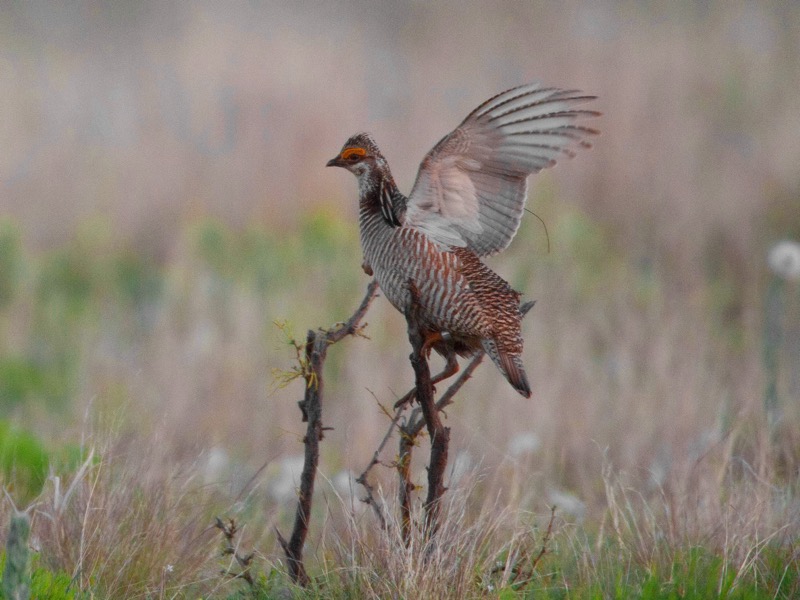
They sport cryptic brown and buff-colored plumage for camouflage in the grasslands. Males are distinguished by long feather tufts on the sides of their necks called pinnae, which they erect during courtship displays.
During breeding season, males display bright yellow eye patches and inflate reddish-orange air sacs on their necks while performing elaborate dances.
// THE LEKKING DISPLAY DANCE
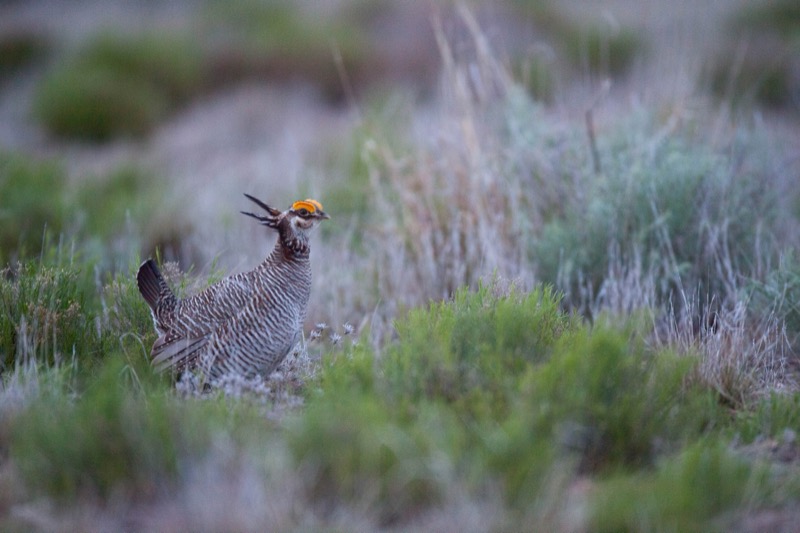
Lesser prairie-chickens exhibit lek mating behavior, one of nature's most spectacular courtship rituals.
Each spring, males gather at traditional display grounds called leks — open patches of short grass where they've performed for generations. At dawn, they begin their routines: stamping their feet rapidly, inflating their bright reddish air sacs, raising their pinnae feathers straight up, and producing deep booming calls that carry across the prairie.
Females visit the lek, observe from the edges, and eventually choose a mate. Only a few dominant males win the majority of matings each season — it's fierce, noisy, and absolutely mesmerizing to witness.
// HABITAT & RANGE
Lesser prairie-chickens require very specific native grassland ecosystems — a patchwork of open prairie and low shrubs on the sandy soils of the southern high plains. Habitat type varies significantly between the northern and southern portions of the range.
KEY PLANT COMMUNITIES:
IS THIS HABITAT PROTECTED?
In 2023, USFWS designated approximately 9.1 million acres as Critical Habitat across the 5-state range. The BLM also manages Areas of Critical Environmental Concern (ACECs) in New Mexico specifically for shinnery oak LEPC habitat.
However: the vast majority of LEPC habitat is private land. Critical Habitat protections only trigger when a federal agency authorizes, funds, or carries out an action. Following the February 2026 delisting, even the Critical Habitat designation is now legally uncertain.
- Colorado (SE corner — sand sagebrush)
- Kansas (western half — sand sagebrush)
- New Mexico (eastern plains — shinnery oak)
- Oklahoma (panhandle + west — mixed)
- Texas (panhandle + Llano Estacado — shinnery oak)
.jpg?width=480)
// RANGE MAP
// schematic distribution — approximate historical range, 5-state region
// NESTING & EGGS
Lesser prairie-chickens are ground nesters. After mating at the lek, females move off alone to build concealed scrape nests beneath shinnery oak or sagebrush.
NEST SPECS:
- Scraped 5–10 cm into sandy soil
- Up to 20 cm wide
- Lined with dried grasses, leaves, and feathers
- Situated under or beside shrubs for shade & concealment
- Most common under shinnery oak or sand sagebrush
THE EGGS:
- 11–14 eggs per clutch (occasionally up to 16)
- Buffy to olive-tan, lightly spotted brown
- Incubated by female alone: ~23 days
- Chicks are precocial — leave nest within hours of hatching
- Fledged within 4 weeks; fully independent by 8–10 weeks
Nests are highly vulnerable to predation and habitat disturbance. Even minor alterations to shinnery oak — herbicide application, tillage, livestock overgrazing — can cause nest abandonment.
(NRCS_Photo_Gallery).jpg?width=480)
Nest & egg photos: USFWS Digital Media Library
// CONSERVATION STATUS
On March 29, 2025, U.S. District Judge David Counts vacated both DPS listings. USFWS published the formal delisting in the Federal Register on February 26, 2026. As of that date, the LEPC has no federal ESA protections of any kind.
LISTING HISTORY — TIMELINE:
- 2014 — USFWS lists LEPC as Threatened under ESA
- 2015 — Federal court vacates 2014 listing; species removed from ESA
- 2016–2021 — Species unprotected; populations continue declining
- Nov 2022 — USFWS re-lists: Northern DPS as Threatened, Southern DPS as Endangered
- May 2023 — U.S. Senate votes to strip protections (Congressional Review Act)
- Sep 2023 — President Biden vetoes the CRA bill; protections temporarily preserved
- Mar 2025 — Federal judge (W.D. Texas) vacates both DPS listings
- Feb 2026 — USFWS publishes formal delisting in Federal Register — all protections gone
WHY THE POPULATION DECLINED:
- Population estimated down ~97% from pre-settlement levels
- Habitat reduced by ~85% from historical range
- Agricultural conversion of native grassland to cropland
- Oil & gas development within core range (Permian Basin, Anadarko)
- Wind energy development — towers and transmission lines displace birds
- Woody plant (tree) encroachment into open grassland
- Prolonged drought reducing grass cover and food availability
- Only ~0.1% of remaining habitat is sufficiently contiguous to sustain a minimum viable population
VOLUNTARY CONSERVATION MECHANISMS (NO LONGER LEGALLY REQUIRED):
- Candidate Conservation Agreements with Assurances (CCAAs) — rancher voluntary programs
- USDA Farm Bill programs (CRP, EQIP)
- State wildlife agency lek monitoring
- BLM Areas of Critical Environmental Concern in New Mexico
- Multi-state LEPC Range-Wide Conservation Plan
// WHAT IS A “TAKE”?
Under the Endangered Species Act, Section 9 prohibits any person from taking a listed species. The word “take” has a specific, broad legal meaning:
“Harm” is defined by regulation to include “significant habitat modification or degradation where it actually kills or injures wildlife by significantly impairing essential behavioral patterns, including breeding, feeding, or sheltering.”
For LEPC specifically, a “take” could include:
- Deliberately shooting or trapping a bird
- Plowing or spraying herbicide on shinnery oak during nesting season
- Installing wind turbines within active lekking areas without mitigation
- Repeatedly flushing birds from leks during breeding season (harassment)
- Drilling oil wells in core habitat, destroying nesting cover (harm)
Developers could apply for Section 10 Incidental Take Permits, authorizing unavoidable take subject to a Habitat Conservation Plan (HCP). Since the February 2026 delisting, ESA §9 no longer applies to the LEPC — takes are now unregulated at the federal level.
// IS PROTECTION PERMANENT?
Short answer: No — and right now, it’s gone entirely.
The LEPC has been listed, delisted, and re-listed multiple times. As of February 26, 2026,
the species has zero federal ESA protections of any kind.
WHY IS THE LISTING POLITICALLY CONTESTED?
The LEPC’s range overlaps almost perfectly with the U.S. oil & gas heartland — the Permian Basin, the Anadarko Basin, and the Texas Panhandle. Energy companies, agricultural producers, and state governments in the 5-state region have consistently opposed federal listings, arguing:
- ESA listings restrict oil & gas permitting on federal land
- Agricultural operations (plowing, herbicide) face federal regulation
- Wind energy development faces permitting hurdles in the range
- State-level voluntary conservation is claimed to be “sufficient”
CURRENT SITUATION (AS OF AUG 2026):
- USFWS delisting published Feb 26, 2026 — no ESA §9 take prohibitions
- No ESA §7 consultation required for federal projects in LEPC habitat
- Critical Habitat designation legally void without an underlying listing
- Conservation groups considering litigation to challenge the ruling
- IUCN continues to list LEPC as Vulnerable globally
CAN IT BE RE-LISTED?
Yes — USFWS could propose a new listing if population surveys warrant it, or if appeals courts overturn the 2025 ruling. Conservation groups including Center for Biological Diversity and Audubon Society have historically challenged LEPC delistings in court. But re-listing takes years, and populations continue to decline with no protection in the interim.
// BONUS: THE FEMALES
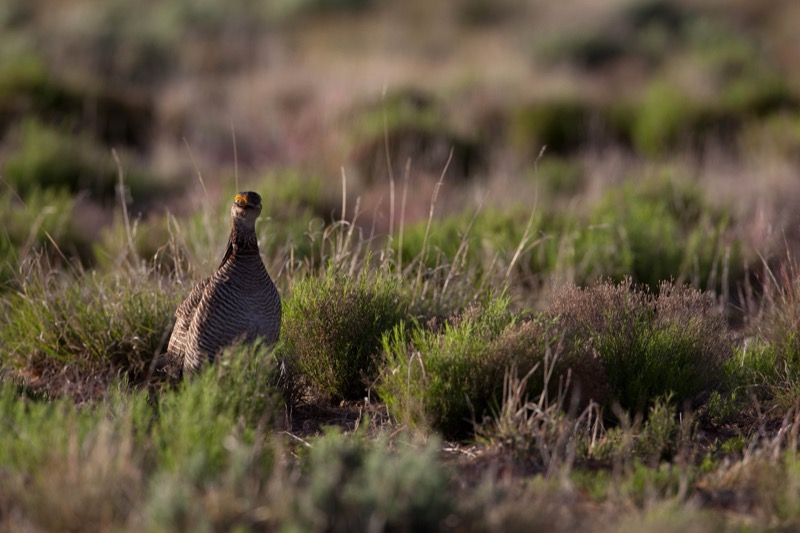
While the males get all the attention with their flashy displays, the females are the real decision-makers. They visit multiple leks, carefully evaluate potential mates, and choose only the most impressive performers.
Females are slightly smaller and sport more uniformly brown plumage — perfect camouflage for nesting on the open prairie. They raise chicks solo, relying on their cryptic coloring to avoid predators.
// WHY THIS FAN CLUB EXISTS
We're a group of bird nerds, prairie enthusiasts, and conservation advocates based in Artesia, New Mexico. We started the LEPC Fan Club because we believe the lesser prairie-chicken deserves more fans.
Our goals:
- Raise awareness of this incredible species
- Support grassland conservation in the southern plains
- Build a community through events, merchandise, and newsletters
- Make bird conservation fun, nerdy, and accessible
Species info: U.S. Fish & Wildlife Service. Photos: Ryan Hagerty / USFWS. Public domain.